
Wakesurf vs Wakeboard Budapest — Wakesurf Budapest
Choosing between wakesurf vs wakeboard Budapest? Wakesurf Budapest offers both sports on the Danube with two premium boats — Super Air Nautique G23 and ATX Type S 22 — at two locations: Wiking Yacht Club Marina and Budapest Yacht Club / Római-part. Both boats feature a professional wakesurf ballast system — traditional or NSS™-controlled — so we can shape the ideal wave for beginners and experienced riders alike. Below we compare wakesurf vs wakeboard Budapest across all the key axes: rope, speed, equipment, learning curve, injury risk and who each sport suits.
Wakesurf vs wakeboard Budapest sessions can be combined with motorboat rental with captain, sunset cruises or a full-day Danube Bend tour (Szentendre, Visegrád, Esztergom) — all on the same booking. Minimum 1 hour, per-minute billing after that; 4-hour weekday bookings get up to 20% discount.
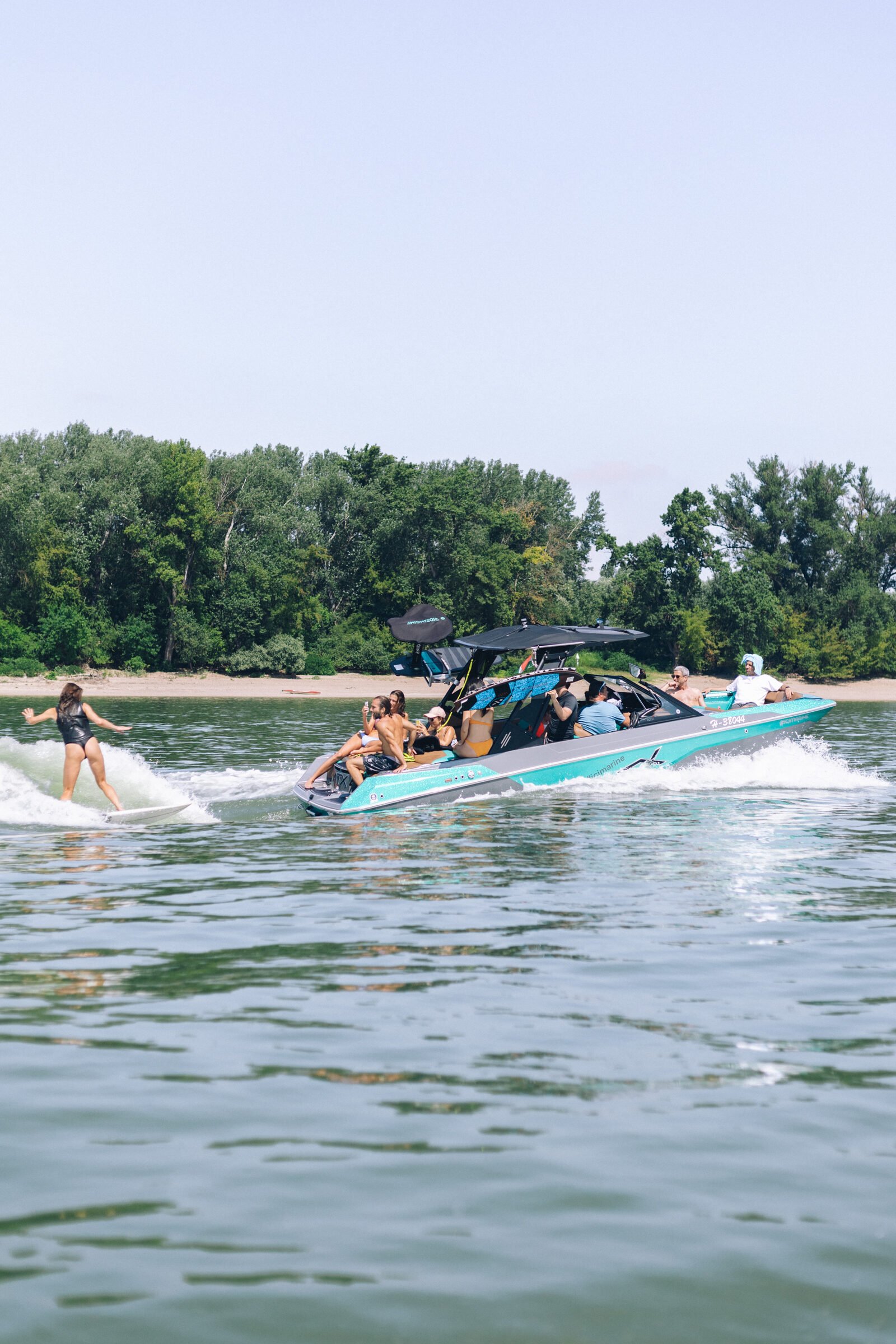
Wakesurf vs wakeboard Budapest: both sports in brief
Both wakesurf and wakeboard are available on the Danube in Budapest — but they offer completely different experiences and suit different people. The classic question: I’ve never done watersports, which one should I try first? Or: I have a snowboard background, which one will feel familiar? This guide answers both. Let’s see the main differences across all the meaningful axes.
1. Rope: yes or no?
The biggest difference: on wakeboard the boat pulls the rider on a ROPE — a 60-foot polypropylene line attached to the boat tower. On wakesurf you start with a short rope, then drop it as the boat’s wake pushes you forward. Rope-free surfing behind the boat — that’s the wakesurf experience. The wakesurf ballast system in both our boats is what makes the wave large and steep enough to sustain rope-free riding.
2. Speed comparison
Wakeboard runs at 21–25 mph (34–40 km/h). Wakesurf is much slower: 10–12 mph (16–20 km/h). The lower speed makes wakesurf easier to try for the first time — especially with the properly tuned wakesurf ballast wave our instructors set up for each group.
Wakesurf vs wakeboard Budapest: 3. Equipment
Wakeboard requires bindings, a 60-foot rope, helmet and life jacket. Wakesurf uses a shorter, wider board (no bindings, soft top options for beginners), a short rope for the start phase, and a life jacket. Both boards are provided — no personal equipment needed. The Super Air Nautique G23 and ATX Type S 22 both run wakesurf ballast tanks (up to 4,500 lbs combined in the G23) that shape the wake specifically for each sport and each rider’s weight.
4. Learning curve
Wakeboard: most beginners get up on the board within the first session, but mastering jumps and tricks takes months. Wakesurf: the drop-rope moment takes 2–5 sessions on average, but riding the wake rope-free and carving waves comes quickly after that. Because the wakesurf ballast wave can be shaped to match the rider’s level, beginners progress faster than on a fixed-wake setup.
5. Injury risk
Wakesurf is the gentler sport: softer water impact, no rope → no jerking, no shoulder strain, no bindings → if you fall, you simply slip off the board. Wakeboard, by contrast, has more frequent muscle pulls and shoulder strains. Proper technique and instruction are critical in both — see first wakesurf experience for safety details.
Wakesurf vs wakeboard Budapest: 6. Who is it for?
Choose wakesurf if…
- You’re trying watersport for the first time
- You’re a child, older adult, or moderate-fitness adult
- You want to try ocean-style surfing
- You prefer gentle, flow-based experience
- You want to spend a day with team or family
Choose wakeboard if…
- You’ve done similar sports (snowboard, kiteboard)
- You want adrenaline and speed
- Tricks and jumps interest you
- You plan to train regularly
Tip: combine!
Many of our club members do both sports — wakesurf is the choice on social-day occasions, wakeboard on athletic-day occasions. The Surf Club membership covers both. Book your first session online →
What our guests say — wakesurf vs wakeboard Budapest reviews
Still deciding between wakesurf vs wakeboard Budapest? Read what our guests say: Wakesurf Budapest on Tripadvisor — dozens of verified reviews from riders who tried both sports. You can also leave your own Google review here after your session.
Wakesurf experience on the Danube — all our services in one place
Wakesurf Budapest is the complete wakesurf, motorboat rental and sunset cruise provider in Budapest. We work with two premium wakesurf boats on the Danube: models built by Super Air Nautique and ATX Boats. Both boats run a traditional or NSS™-controlled wakesurf ballast system, so the wave character can be fine-tuned in minutes — from beginner-friendly to competition-grade steep waves.
We ride at two locations: Wiking Yacht Club Marina (north Óbuda) and Budapest Yacht Club / Római-part — both on the Danube with direct water access. Our motorboat rental with captain option means you can combine wakesurf or wakeboard with a sunset cruise, city sightseeing or a Danube Bend tour on the same booking.
Related services
- Wakesurf lessons for beginners and advanced riders
- Motorboat rental with captain
- Sunset cruise and Danube Bend tour
- How the wakesurf ballast system works
- Prices and online booking
Why choose us for wakesurf vs wakeboard Budapest
We have been running wakesurf vs wakeboard Budapest sessions on the Danube for 8 years. Wakesurf Budapest brings two premium American boats (NSS™ + classic wakesurf ballast systems), two Danube locations (Wiking Yacht Club Marina + Budapest Yacht Club), professional instructors, and optional motorboat rental with captain and sunset cruise add-ons. Check our Tripadvisor reviews or leave a Google review after your session. Book your slot online →